
Bispecific Cancer Therapy
Cancer treatment is becoming more targeted and personalized than ever before. One recent advancement in immunotherapy is bispecific antibody therapy, which helps the immune system more effectively recognize and attack cancer cells. These therapies are transforming the treatment of some cancers by enhancing the immune response against the disease.
At Cancer Care Centers of Brevard, we are committed to ensuring each patient has access to advanced treatment options, including bispecific antibodies, when appropriate for their treatment plan.
What Is Bispecific Antibody Therapy?
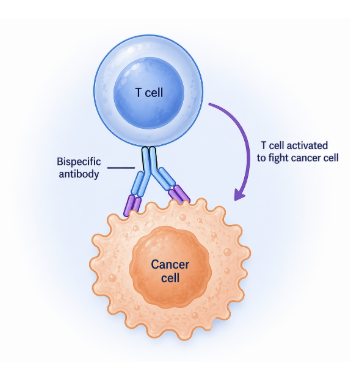
Bispecific antibodies, often called BiTEs or T-cell engagers, are a type of immunotherapy that helps the immune system identify and destroy cancer cells. They work by linking a T-cell, which is a type of white blood cell that fights disease, directly to a cancer cell. Once connected, the T-cell becomes activated and attacks the cancer cell.
Unlike some immunotherapies that stimulate the immune system more broadly, bispecific antibodies are designed to specifically target cancer cells. This approach may improve the effectiveness of treatment while minimizing damage to healthy tissue.
How Bispecific Antibody Therapy Works
Bispecific antibodies are built with two distinct binding sites, often referred to as “arms”:
One arm attaches to a specific marker (antigen) found on the surface of cancer cells
The other arm binds to a T-cell in the immune system
By bringing these two cells together, the drug therapy activates the T-cell and directs it toward the cancer cell. This process enables T-cells to recognize and attack cancer cells more efficiently.
How Do Bispecific Antibodies Differ From Other Cancer Treatments
Bispecific antibody therapy stands out from traditional cancer treatments and even other forms of immunotherapy for several reasons:
A more targeted approach: Traditional chemotherapy affects both cancerous and healthy cells throughout the body, which often results in more side effects. In contrast, bispecific therapies are designed to specifically recognize markers on cancer cells, helping minimize damage to healthy cells. While side effects can still occur with bispecific therapies, they are generally less severe because of their targeted approach.
Activates the immune system more directly: Some immunotherapies, like checkpoint inhibitors, work by removing barriers that prevent the immune system from responding to cancer. Bispecific antibodies work differently by actively bringing immune cells directly to cancer cells and triggering an immune attack.
No need for cell modification: Unlike CAR T-cell therapy, bispecific antibodies do not require doctors to remove and genetically modify a patient’s immune cells in a lab before treatment. Bispecific antibody therapies are manufactured in advance and are ready to use when needed. This typically allows patients to start treatment sooner.
More accessible treatment option: Because bispecific antibodies do not need cell modification, they may be more widely available to patients than certain other types of immunotherapies. Most patients can receive treatment as an outpatient rather than staying in the hospital.
What Types of Cancer Can Bispecific Antibodies Treat?
The FDA has approved bispecific antibody therapies for several types of cancer, including:
Multiple myeloma
Certain lymphomas
Acute lymphoblastic leukemia (ALL)
Some lung cancers, including both non-small cell and small cell lung cancer
Cervical cancer
Ocular melanoma
Researchers are also exploring how bispecific antibody therapies may help treat additional cancers, including:
Breast cancer
Prostate cancer
Gastrointestinal cancers
Kidney cancer
Clinical trials continue to study additional ways bispecific antibodies may work alongside other cancer treatments and whether these combinations will improve long-term outcomes.
Learn more about clinical research trials at CCCB.
How Bispecific Antibody Therapy Is Given
Bispecific antibody therapy is typically administered either by intravenous (IV) infusion or by subcutaneous injection. The exact method depends on the specific medication being used and the type of cancer being treated.
Treatment schedules can vary, but many therapies are given every one to three weeks. Some patients may require more frequent visits at the beginning of treatment.
Doctors often start with smaller doses to help reduce the risk of side effects while the body adjusts to therapy. Patients may also receive supportive medications to help support the immune system.
One of the most common side effects of BiTEs is cytokine release syndrome (CRS). This occurs when the immune system overactivates and releases inflammatory chemicals into the body. Symptoms of CRS may include fatigue, fever, chills, headache, shortness of breath, or low blood pressure. Bispecific antibody therapy can also cause nausea, infections, and injection-site reactions.
Many patients can receive bispecific therapy in an outpatient setting. However, some patients may require short-term monitoring in the hospital after treatment to make sure they tolerate the therapy safely. It’s important to talk to your CCCB care team about any symptoms or concerns you have so they can be addressed promptly.
Advancing Care Through Clinical Research at CCCB
Clinical trials through CCCB make it possible for patients in Brevard County to access advanced treatment options close to home. Through our partnership with Sarah Cannon Research Institute and participation in clinical trials, our cancer specialists help bring new and emerging treatments, including bispecific antibody therapies, to patients while advancing cancer research.
Clinical trials play an essential role in improving outcomes and identifying which treatments work best for each patient. Your care team may discuss clinical trial opportunities as part of your overall treatment plan whenever appropriate.
Personalized Cancer Care in Brevard County
The oncologists at Cancer Care Centers of Brevard are experienced in various aspects of cancer treatment and dedicated to bringing new therapies to our communities, including access to clinical trials and innovative treatments such as bispecific antibodies. To find out if this is right for you or a loved one, request an appointment at one of our cancer centers located throughout the Space Coast, including Palm Bay, Melbourne, Merritt Island, and Rockledge, FL.