
Staging Prostate Cancer
If prostate cancer is diagnosed after a biopsy, your doctor will need to know the extent or stage of the disease. This information helps guide them when choosing the right time to start treatment and determining the appropriate treatment plan.
The Prostate Cancer Staging System
The AJCC (American Joint Committee on Cancer) TNM system is the most commonly used prostate cancer staging system. This system is based on five key pieces of information:
T: The extent of the primary tumor
N: Whether the cancer has spread to nearby lymph nodes
M: Whether the cancer has spread to distant areas of the body
The PSA level: The prostate-specific antigen level at the time of diagnosis
The Grade Group: Determined by the Gleason score, this indicates how quickly the cancer is likely to grow and spread
Learn why the Gleason Score is so important to prostate cancer patients.
The T staging categories of prostate cancer are categorized as clinical (cT) or pathological (pT):
Clinical staging: This is based on PSA testing, the Gleason score, and the Digital Rectal Exam (DRE) findings.
Pathological staging: This is established from information obtained from prostate tissue samples after surgery or a biopsy.
T Categories for Prostate Cancer
TX: The primary tumor cannot be measured.
T0: The primary tumor is not detectable.
T1, T2, T3, and T4: These categories refer to the size and extent of the primary tumor, with higher numbers indicating greater growth into surrounding tissues. There can be further subclassifications, such as T2a, T2b, etc.
N Categories for Prostate Cancer
NX: Cancer in the lymph nodes cannot be evaluated.
N0: No cancer found in nearby lymph nodes.
N1, N2, N3: Numbers indicate how many lymph nodes contain cancer, with higher numbers indicating a greater frequency of cancer in lymph nodes.
M Categories for Prostate Cancer
MX: Metastasis cannot be measured.
M0: The disease has not spread to other areas of the body.
M1: Cancer has spread to other parts of the body.
Once the T, N, and M values are established, they are combined to determine the overall stage of the prostate cancer.
The Stages of Prostate Cancer
Stage I Prostate Cancer
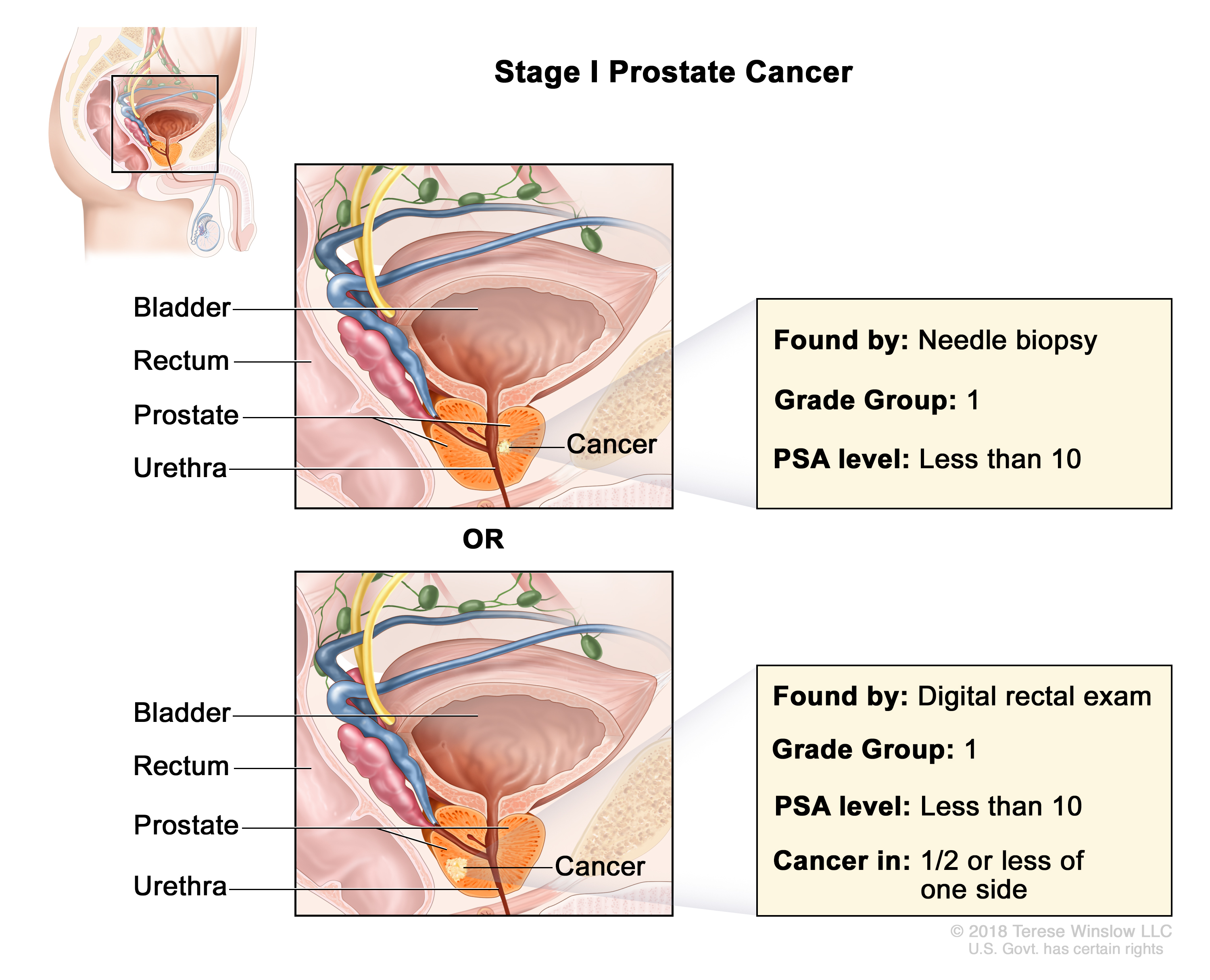
In Stage I prostate cancer, the cancer cannot be felt during a digital rectal exam (DRE) and cannot be seen on imaging, such as a transrectal ultrasound. At this stage, the cancer has not spread to nearby lymph nodes or anywhere else in the body. (cT1, N0, M0, Grade Group 1 (Gleason score 6 or less), PSA less than 10)
OR
The cancer can be felt during a DRE or seen on imaging, and it is present in one-half or less of only one side (either left or right) of the prostate. The cancer has not spread to nearby lymph nodes or anywhere else in the body. (cT2a, N0, M0, Grade Group 1 (Gleason score 6 or less), PSA less than 10)
OR
The prostate has been surgically removed, and the tumor was confined to the prostate only. The cancer has not spread to nearby lymph nodes or elsewhere in the body. (pT2, N0, M0, Grade Group 1 (Gleason score 6 or less), PSA less than 10)
Stage II Prostate Cancer
Stage II prostate cancer is divided into three sub-stages: IIA, IIB, and IIC.
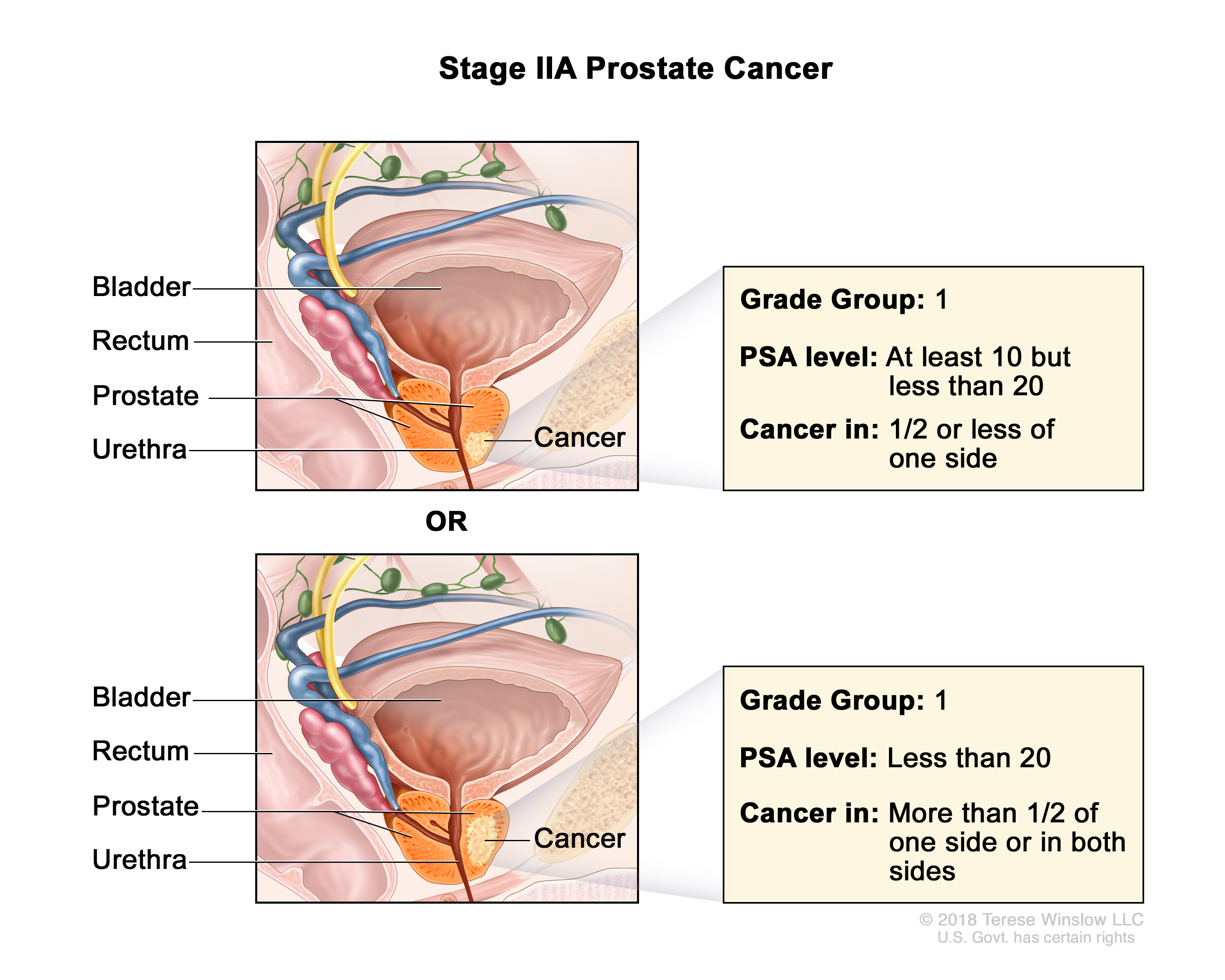
Stage IIA: The tumor cannot be felt or seen on imaging and involves half of one side of the prostate or less, OR the prostate has been surgically removed, and the tumor was confined to the prostate. The cancer has not spread to nearby lymph nodes or anywhere else in the body. (cT2a or pT2, N0, M0, Grade Group 1 (Gleason score 6 or less), PSA at least 10 but less than 20)
OR
The tumor can be felt during an exam or seen with imaging, and it is present in more than half of one side of the prostate or both sides. The cancer has not spread to nearby lymph nodes or other parts of the body. (cT2b or cT2c, N0, M0, Grade Group 1 (Gleason score 6 or less), PSA less than 20)
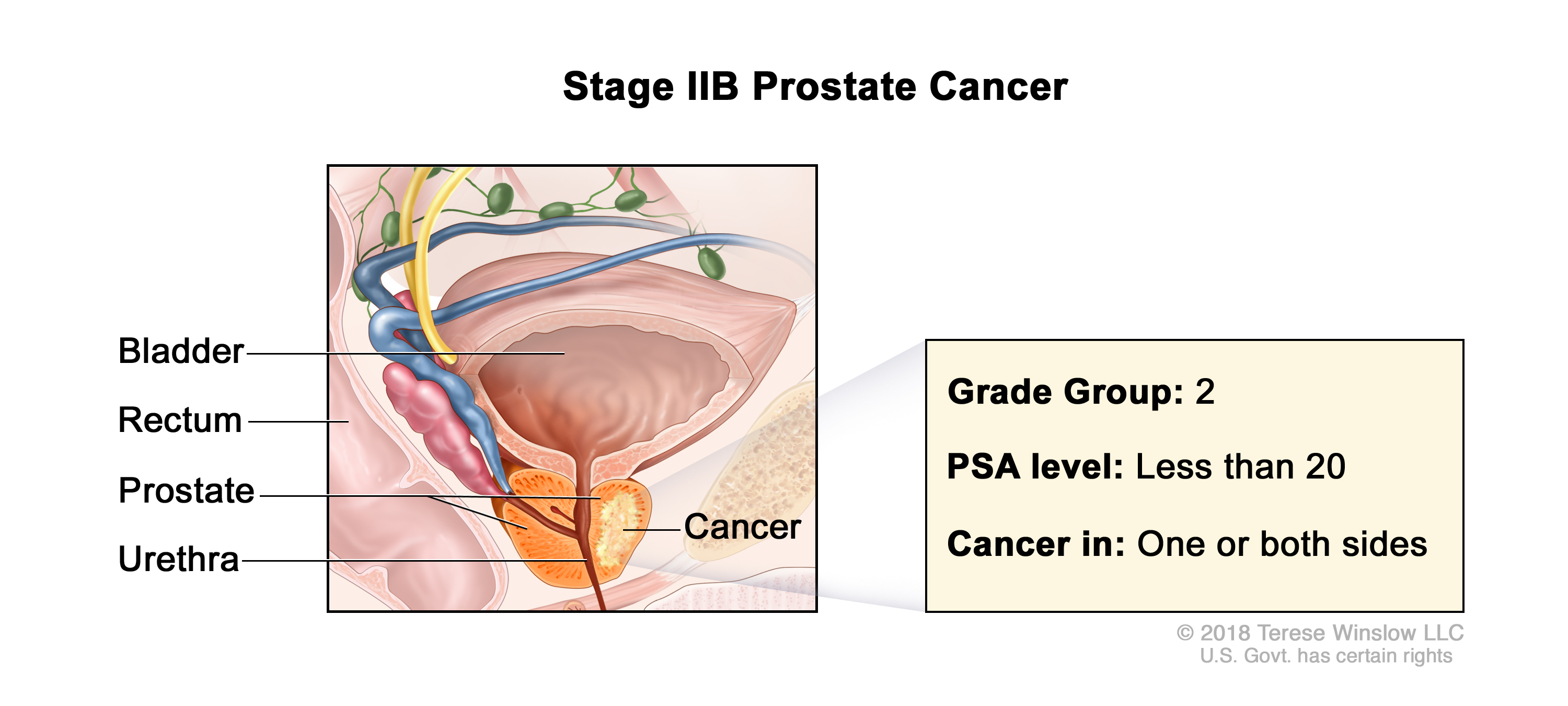
Stage IIB: The tumor is contained within the prostate, and it may be large enough to be felt during a DRE or seen on imaging. The cancer has not spread to nearby lymph nodes or elsewhere in the body. (T1 or T2, N0, M0, Grade Group 2 (Gleason score 3+4=7), PSA less than 20)
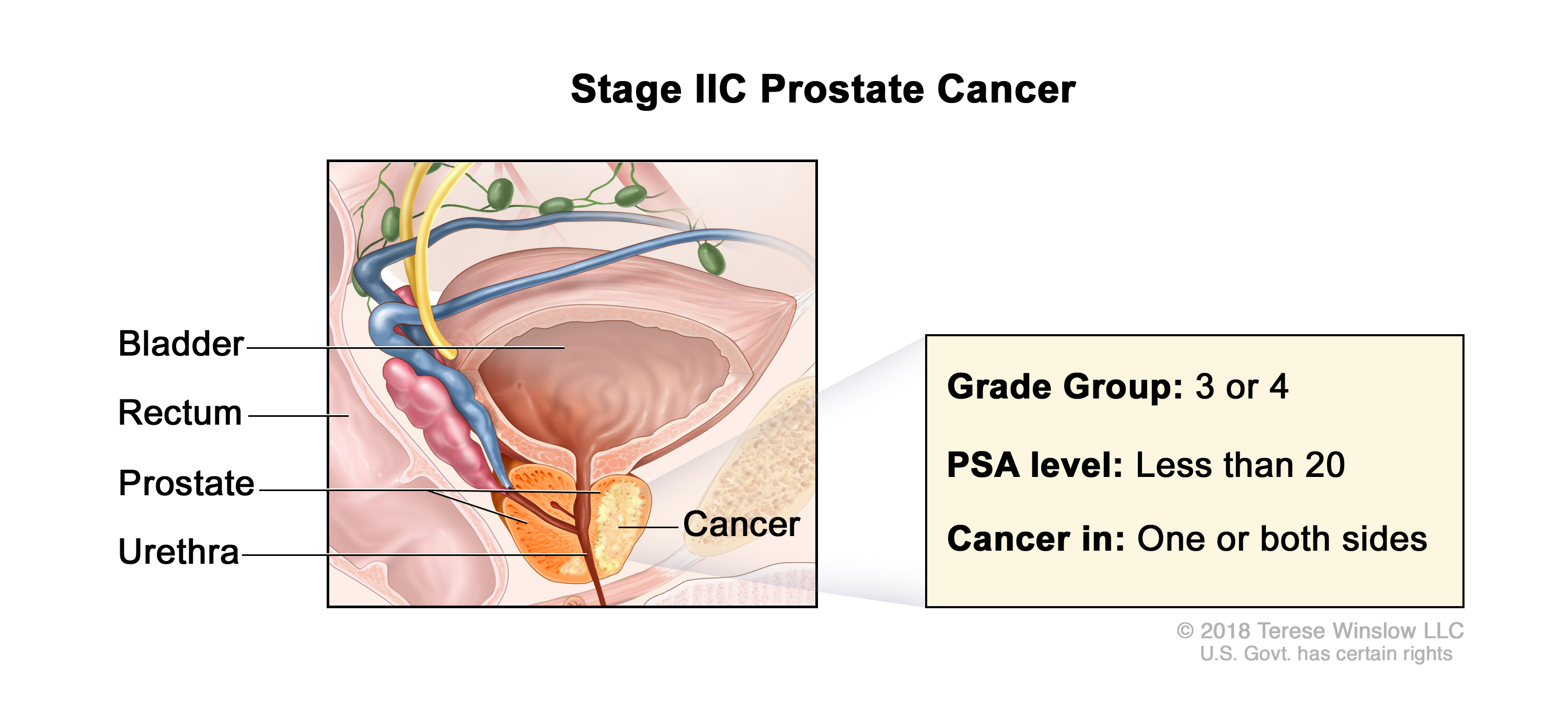
Stage IIC: The tumor is also confined to the prostate and may be felt during a DRE or seen on imaging. The cancer has not spread to nearby lymph nodes or elsewhere in the body. (T1 or T2, N0, M0, Grade Group 3 or 4 (Gleason score of 4+3=7 or 8), PSA less than 20)
Stage III Prostate Cancer
The tumor extends beyond the prostate. The tumor may have invaded the seminal vesicles, but cancer cells haven’t spread to the lymph nodes.
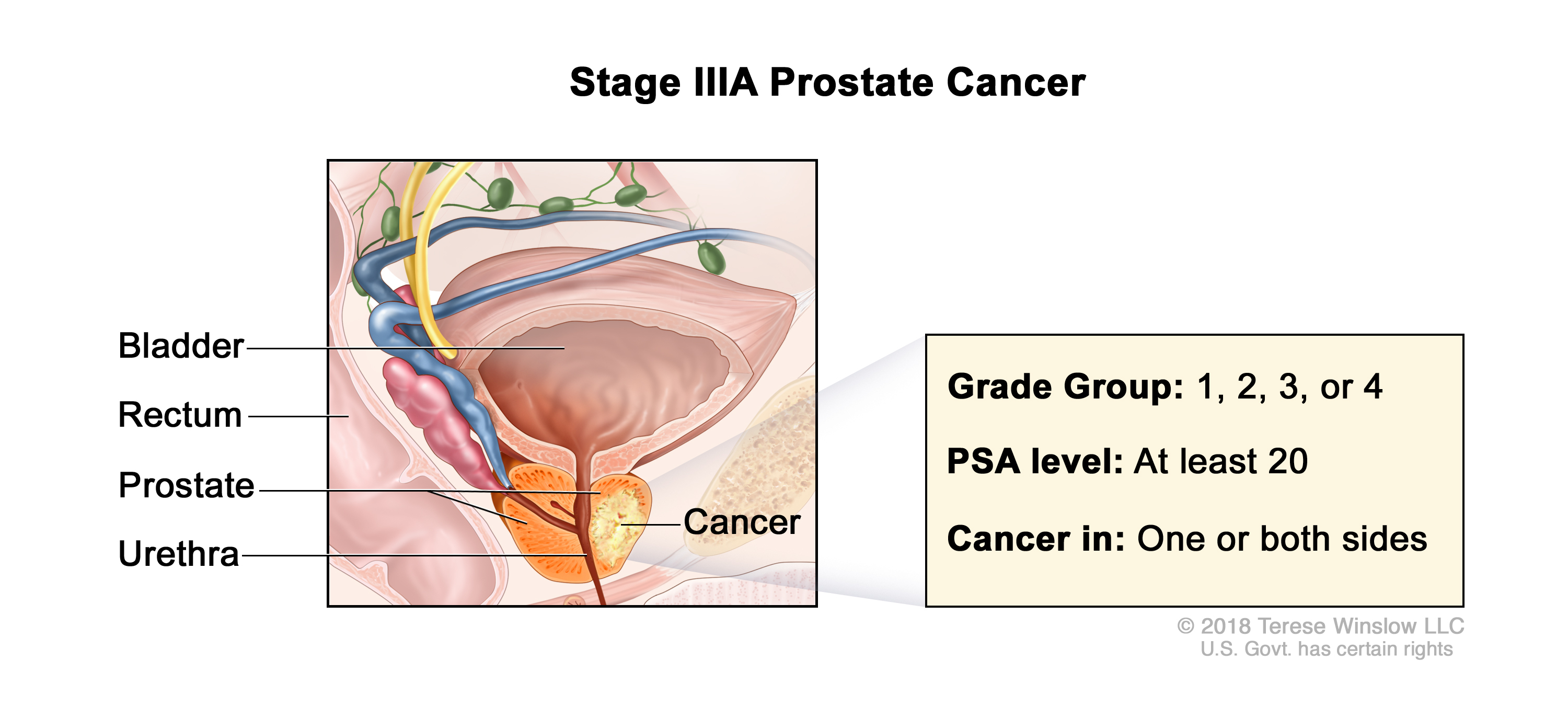
Stage IIIA: The cancer has not yet spread outside the prostate. It may or may not be felt during a DRE or seen on imaging. The cancer has not spread to nearby lymph nodes or elsewhere in the body. (T1 or T2, N0, M0, Grade Group 1 to 4 (Gleason score of 8 or less), PSA at least 20)
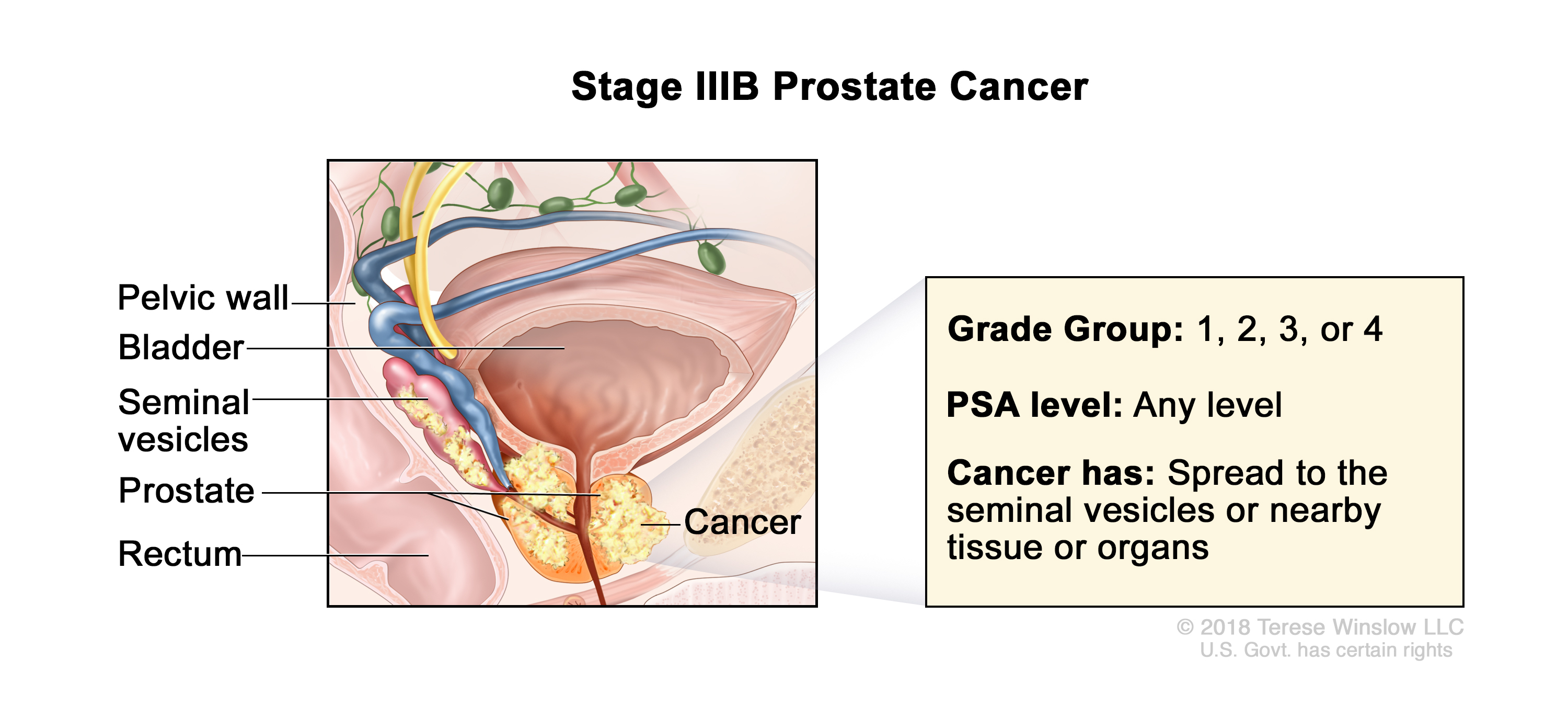
Stage IIIB: The cancer has grown outside the prostate and may have spread to the seminal vesicles or other tissues adjacent to the prostate, such as the urethral sphincter, rectum, bladder, or the pelvic wall. It has not spread to nearby lymph nodes or elsewhere in the body. (T3 or T4, N0, M0, Grade Group 1 to 4 (Gleason score of 8 or less), Any PSA)
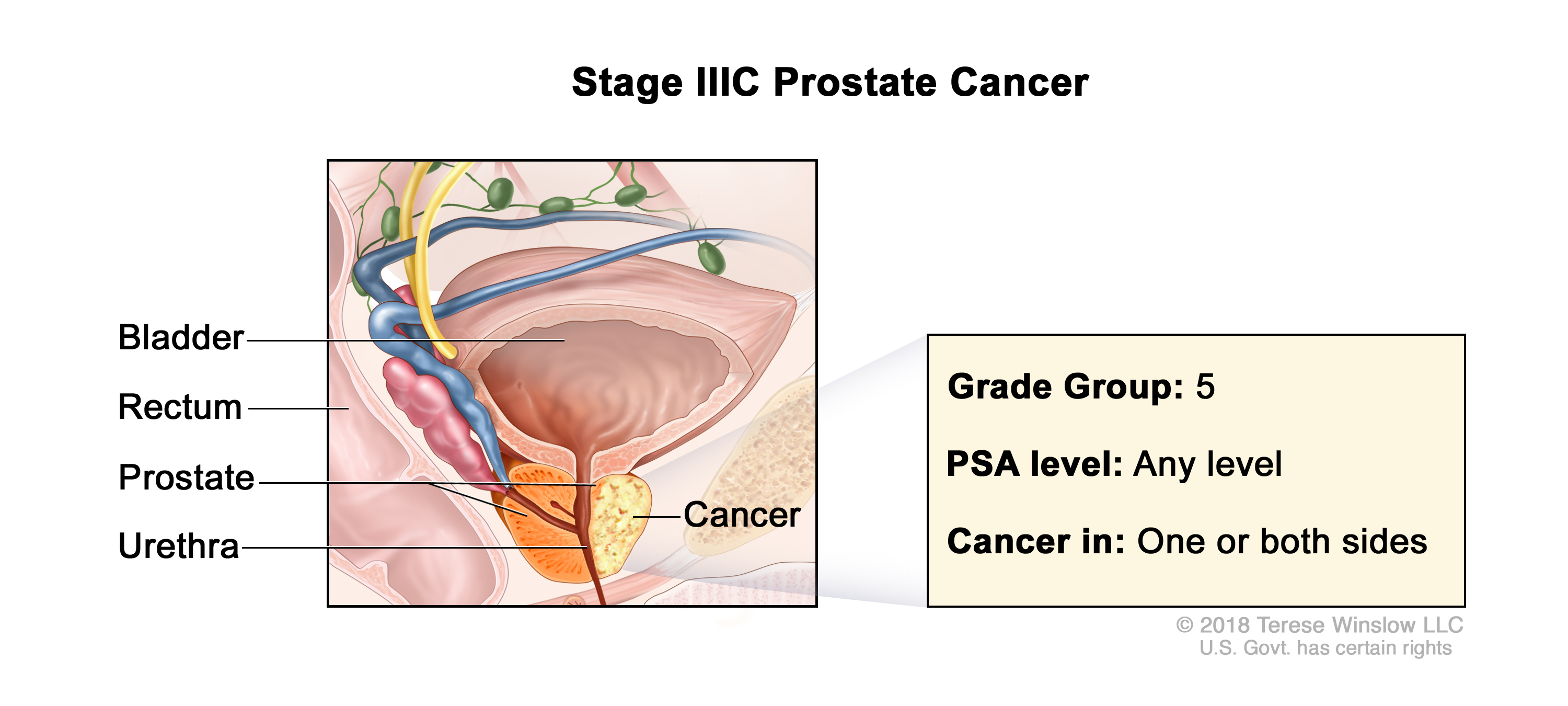
Stage IIIC: The cancer may or may not be growing outside the prostate and into nearby tissues. It has not spread to nearby lymph nodes or elsewhere in the body. (Any T, N0, M0, Grade Group 5 (Gleason score of 9 or 10), Any PSA)
Stage IV Prostate Cancer
Stage IV prostate cancer is divided into two sub-stages: IVA and IVB.
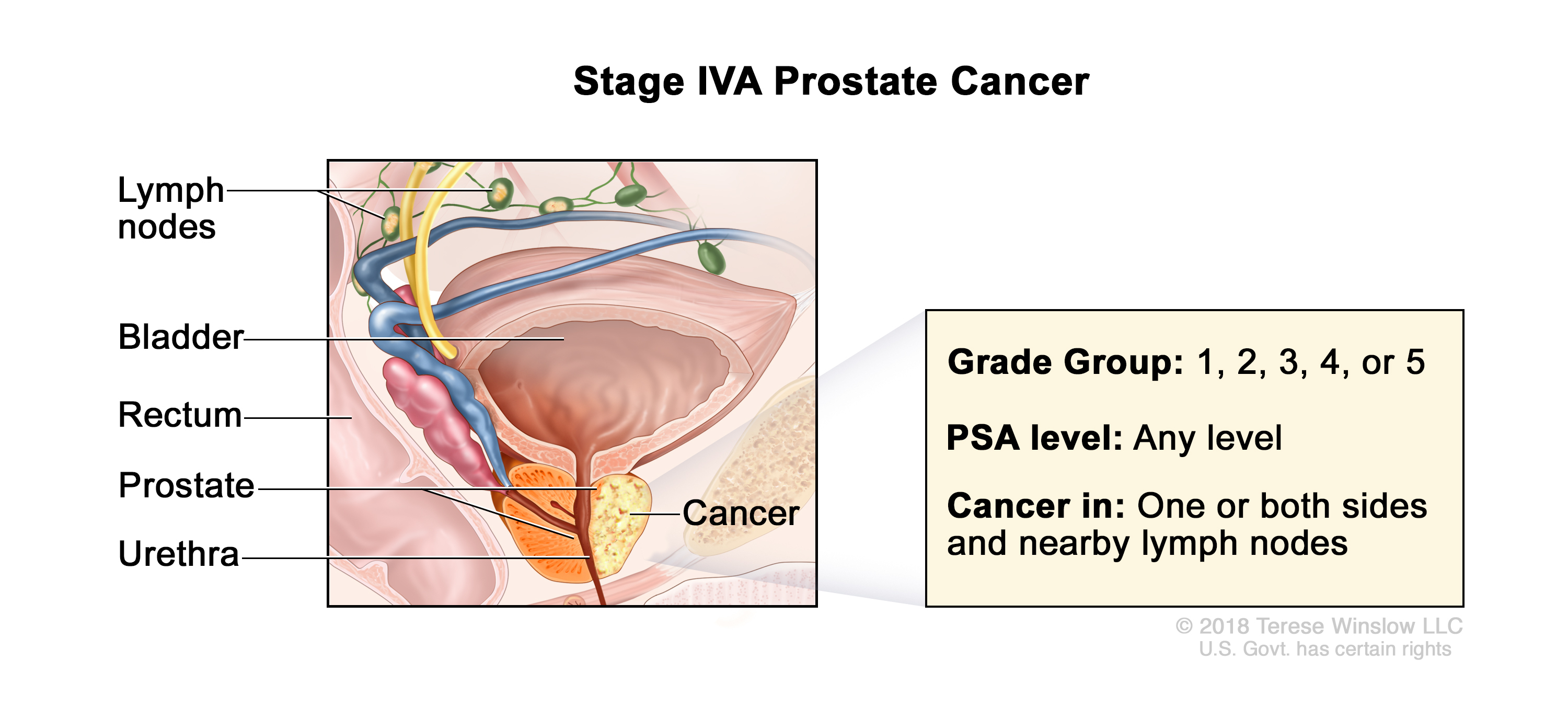
Stage IVA: The tumor may or may not be growing into tissues near the prostate. The cancer has spread to nearby lymph nodes but has not spread elsewhere in the body. (Any T, N1, M0, Any Grade Group, Any PSA)
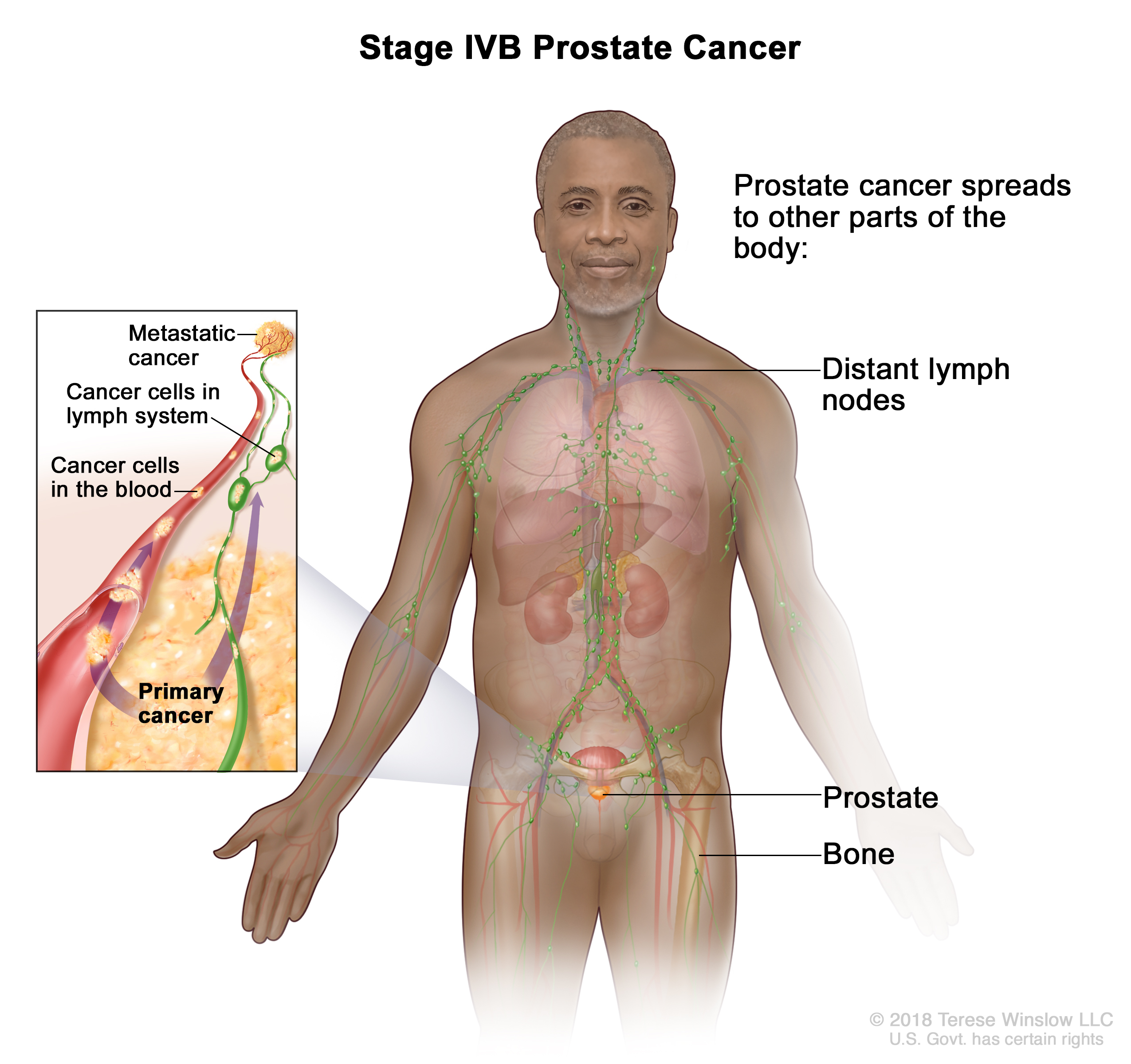
Stage IVB: The cancer may or may not be growing into nearby tissues and may have spread to nearby lymph nodes. It has metastasized to other parts of the body, such as distant lymph nodes, bones, or other organs. (Any T, any N, M1, Any Grade Group, Any PSA)
Assessing the Risk of Prostate Cancer Spreading
Prostate cancer stages tell your oncologist about the cancer in its current state. For localized prostate cancer, the oncologist will also assess the risk of it spreading beyond the prostate at some point. A risk group will be determined based on several factors from the biopsy results: low, intermediate, or high. The timing of treatment and the treatments used are typically influenced by this risk group.
Recurrent Prostate Cancer
Recurrent prostate cancer is cancer that returns after treatment. This recurrence may occur in the area of the prostate or in another part of the body. If prostate cancer recurs, your oncologist will schedule a new set of tests to determine the extent of the recurrence. These tests will be similar to those performed during your initial prostate cancer diagnosis.
Prostate Cancer Doctors at Cancer Care Centers of Brevard
If you or a loved one has received a new prostate cancer diagnosis, our prostate cancer specialists are here to guide you through this journey. It’s always a good idea to consult with both your urologist and an oncologist before selecting your treatment path.
We offer patients a comprehensive and compassionate approach to cancer care and have access to advanced prostate cancer treatment options at our cancer centers throughout Brevard County, including Melbourne, Palm Bay, Merritt Island, and Rockledge, FL.